
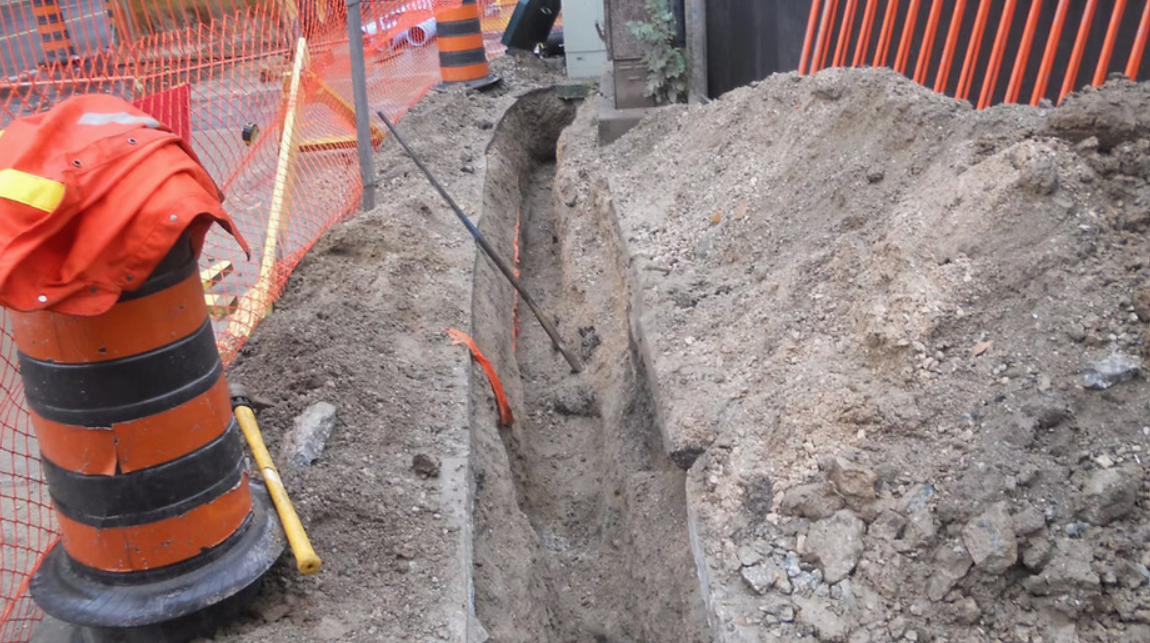
Trenchless methods like horizontal directional drilling get a lot of attention, but traditional open-cut trenching is still the right call for a large share of utility installation projects. The question isn’t which method is more advanced, it’s which one fits the site and the timeline. Here’s when trenching makes the most sense.
This comes up often with property owners, developers, and municipalities who assume trenchless methods are automatically the better choice, when in practice the right answer depends entirely on site conditions.
The Route Has Nothing Worth Protecting on the Surface
Trenching disturbs the surface along the entire length of the dig. That’s a real drawback when there’s pavement, landscaping, or structures to protect, but it’s a non-issue on open land, agricultural properties, or new development sites with nothing built yet. If the surface along the route doesn’t need to be preserved, trenching removes the main reason to consider a trenchless method in the first place.
The Process Itself Is More Straightforward
Trenching follows a simpler, more direct sequence than HDD: dig, install, backfill, compact. It uses less specialized equipment and doesn’t require the same technical planning around bore paths and entry or exit points. On projects where surface disruption isn’t a concern, that simplicity is often the deciding factor on its own.
The Installation Needs Visual Inspection Along the Way
Some projects benefit from being able to see the pipe or conduit as it’s laid, whether to confirm grade, check joints, or verify placement against plans. Open trenching allows for that kind of direct inspection during installation in a way that a bored installation doesn’t. This matters more on projects with strict grade requirements, such as gravity-fed sewer lines, where confirming slope during installation reduces the risk of issues after backfill.
Depth Requirements Are Shallow and Consistent
For shallow, consistent-depth installations, like many residential water lines or short utility runs, trenching is often the more efficient method. HDD tends to show its value more clearly on longer or deeper runs where protecting the surface above the route matters more.
The Site Doesn’t Involve Crossings or Congestion
Trenching works well when the route doesn’t need to pass under a road, rail line, or waterway, and when the area isn’t already dense with existing underground utilities. Fewer things to work around means fewer complications for a straightforward dig-and-install process.
Multiple Utilities Are Being Installed in the Same Corridor
When a project involves laying several utilities in the same trench line, such as water, sewer, and utility conduit together, open trenching allows all of them to be placed and coordinated in a single excavation. This is a common approach on new subdivision development, where multiple services need to be run along the same corridor before roads and lots are finished.
The Project Timeline Allows for an Open Work Zone
Trenching requires the work area to remain open and accessible for the duration of the dig, backfill, and compaction process. On projects where a temporary work zone doesn’t conflict with active use of the site, whether that’s an undeveloped lot, a rural property, or a new development phase, this isn’t a limiting factor. It becomes a bigger consideration on active commercial sites or roads that need to stay in service.
When Trenching Isn’t the Right Fit
Trenching becomes an impractical option when the route crosses roads or rail lines that can’t be closed for the length of the dig, when it would disturb mature trees, hardscaping, or environmentally protected areas, or when the disruption to daily operations at a commercial or municipal site isn’t acceptable. In those situations, horizontal directional drilling is usually worth discussing as the alternative.
Weighing Both Options Before Committing
It’s worth discussing both trenching and HDD with a contractor when a project sits in a grey area, such as a route that’s mostly open but crosses one driveway, or a short section under a lightly used access road. A site-specific conversation about what needs to be protected along the route gives a clearer picture than assuming one method is automatically the right fit.
Making the Call
The decision generally comes down to what’s above the route and how much disruption is acceptable during construction. A site assessment is the most reliable way to confirm which method fits, since ground conditions and existing utilities in the area both factor into the recommendation.
CC Underground provides both trenching and excavating and horizontal directional drilling, and assesses each project on its own site conditions before recommending a method.